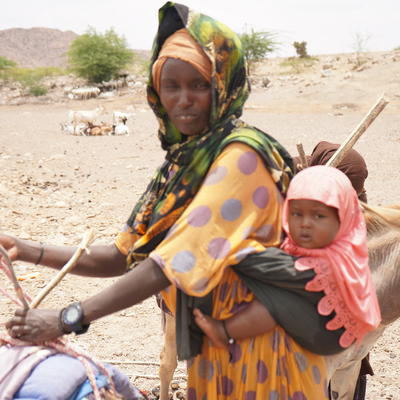
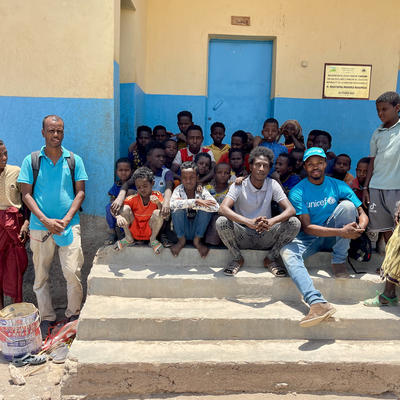
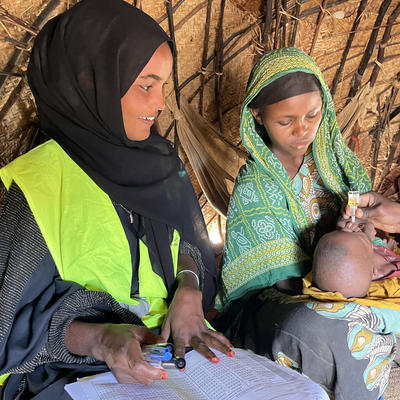
In Djibouti’s arid north, reaching every child with life-saving vaccines is no simple task. The remote village of Gadid, tucked into the rocky foothills of the Obock region, lies far beyond paved roads or regular health services. Here, the nearest clinic may be a full day’s journey away—and many children grow up without ever being seen by the formal health system. But during the April 2025 national polio campaign, a mobile vaccination team set out to change that reality. Their goal was not only to deliver oral polio drops, but to identify and reach the most vulnerable children, especially
Nestled at the foot of Mount Moussa Ali in northern Djibouti, the village of Adgueno is one of many hard-to-reach communities scattered across the country’s mountainous and desert terrain. Here, more than 70 kilometers from the nearest health sub-prefecture in Alaili Dada, families often live without consistent access to health care—making children especially vulnerable to preventable diseases like polio. In April 2025, the national polio campaign presented a rare opportunity to change that. Thanks to coordinated planning, strong leadership, and unwavering field commitment, health teams
In the arid and remote wadis of Dadato Weima and Andoli, in Alaili Dada district, health services rarely reach the nomadic families who move seasonally with their herds. With the closest health post nearly 40 kilometers away, many children are born and raised far from any medical support—missing out on lifesaving vaccines and basic care. But in April 2025, during the first round of Djibouti’s polio vaccination campaign, that changed.
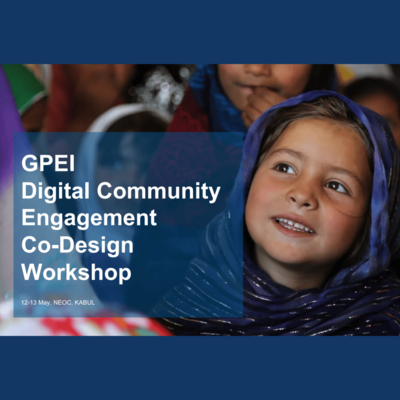
In May 2025, over forty frontline workers, provincial health managers, social mobilizers, and communication specialists from across Afghanistan convened at the National Emergency Operations Center (NEOC) in Kabul for an ambitious two-day co-design workshop. Their goal: co-developing a national Digital Community Engagement (DCE) strategy tailored to Afghanistan’s complex socio-cultural and operational landscape—a strategy that is now undergoing final review and approval.
The 2025 Digital Community Engagement (DCE) Strategy Workshop brought together UNICEF teams and partners to refine strategies for combating vaccine misinformation and boosting confidence through digital channels. DCE, a core extension of SBC efforts, uses real-time social listening, rapid response, and trusted digital voices to counter false narratives and reach communities effectively. The workshop emphasized practical skills—from anticipating misinformation to crafting localized responses—and reinforced the importance of community-led digital mobilization. As DCE scales up, it remains
In turbulent times, frontline workers and communities in Guinea, Niger, and Mozambique are driving progress, while global partners strengthen efforts in Afghanistan and Pakistan. As we mark International Women’s Day, explore the stories of women leading the fight against polio.
Banifandou’s Kadidjatou counters rumors and mobilizes families to embrace routine immunization. Her neighbor-to-neighbor approach highlights the vital role of women in championing polio vaccination.
Known online as “Pacifique,” Seyni Yayé leverages social media to dispel myths and rally his thousands of followers. By partnering with health authorities, he’s proving that digital advocacy can tip the balance against polio.
Polio survivor Kimba Niandou uses his personal story to show the real impact of the disease and encourage parents to vaccinate. His powerful testimony resonates deeply, driving renewed community commitment.
Braving rough terrain on a motorcycle, community volunteer Oumar Boukar travels to remote corners of Tesker to promote vaccination. His unwavering commitment ensures even the most isolated families have access to life-saving vaccines.