

5.27 MB
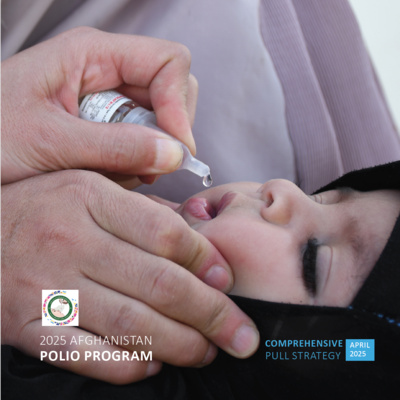
This document presents UNICEF's 2025 comprehensive pull strategy for Afghanistan's polio program — developed in response to the October 2024 ban on house-to-house (H2H) vaccination campaigns and the resulting shift to a site-to-site (S2S) modality. The shift caused a sharp deterioration in campaign quality, with LQAS pass rates in the South falling from 61% to 2% and an estimated 417,000 children missed in the January 2025 round.
Rather than bringing vaccinators to households, the pull strategy focuses on drawing caregivers with eligible children to vaccination sites. It is structured around four pillars: creating an enabling environment through media engagement and de facto authority advocacy; increasing community ownership by strengthening frontline worker skills and engaging local influencers; improving campaign quality through targeted mobilization, integrated service delivery, and vaccine security; and applying evidence-based insights to fill data gaps created by the modality shift.
The strategy is geographically focused on 42 high-risk districts across seven priority provinces, with the East region — where nearly all-female social mobilizer teams and hyper-local site definitions have maintained strong coverage — serving as the primary model for scale-up. UNICEF leads implementation in coordination with WHO, Rotary, and humanitarian partners.
Practitioners will find this document useful for understanding how to optimize S2S campaigns, engage resistant communities, and sustain program quality under operational and political constraints.