
17.22 MB
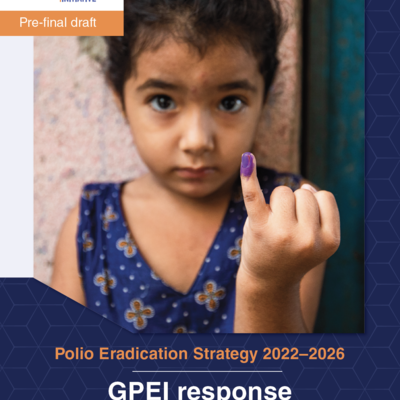
This 2023 GPEI publication presents the official programmatic response to the independent midterm review of the Polio Eradication Strategy 2022–2026. It documents how the GPEI evaluated its progress at the midpoint of the strategy and articulates adaptive adjustments made in response to the review's findings. The document serves as both an accountability report and a revised roadmap for the second half of the strategy cycle.
The midterm review assessed performance across both major goals: interrupting poliovirus transmission and strengthening immunization systems. The GPEI response acknowledges significant challenges — continued WPV1 persistence in Afghanistan and Pakistan, expansion of cVDPV2 outbreaks into new geographies, and operational disruptions caused by conflict, instability, and COVID-19 recovery burdens. Evidence-based analysis addresses what worked, what did not, and why.
Key adaptive changes include refined high-risk district targeting, intensified focus on zero-dose populations, strengthened environmental surveillance integration, revised SIA performance benchmarks, and updated transmission interruption timelines. The document also details enhanced nOPV2 deployment protocols and improved outbreak response coordination. A governance section outlines structural adjustments recommended by the review at both global and country levels.
Regional performance analysis covers Afghanistan, Pakistan, Africa, and the Eastern Mediterranean. Updated financial projections reflect the adjusted operational scope. Essential reading for GPEI program managers, monitoring bodies, donor governments, and health ministry officials responsible for program oversight and accountability.
Who should read this: GPEI program managers, country directors, IMB members, senior health ministry officials, donor government representatives, epidemiologists, SIA planning and oversight officials.
Document value: Authoritative account of GPEI's evidence-based course correction at the midpoint of the 2022–2026 strategy. Essential for understanding current programmatic priorities and the rationale for strategic adjustments.