
957.28 KB
This brief from the Global Center for Gender Equality (GCfGE) shows how Ethiopia's polio programme — managing Africa's largest active cVDPV2 outbreak in 2025 — is reducing gender-related barriers through approaches built into standard polio programming, rather than separate gender-specific interventions.
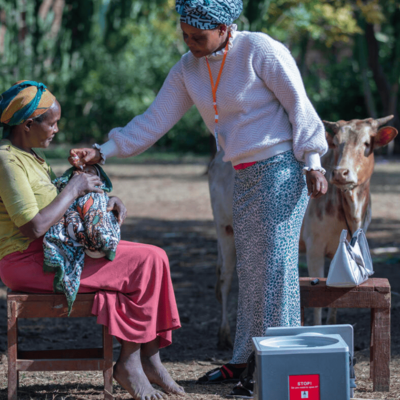
House-to-house (H2H) campaigns ease the time, mobility, and permission burdens that often keep women from reaching health facilities. Mop-up visits catch mothers who were in the fields or unavailable, and provide a second chance to address misinformation or speak with hesitant fathers. The country's largely female frontline workforce — including the Women's Development Army (WDA) — builds trust with mothers, while a new Ministry of Health pilot on direct digital payments to FLWs aims to support women's motivation, retention and financial independence. The brief also flags persistent gaps, particularly in leadership: 90% of surveillance officers are men, and reaching pastoralist and conflict-affected communities still requires a balanced workforce. In 2025, two nationwide nOPV2 campaigns reached over 110,000 previously unvaccinated children.