
18.4 MB
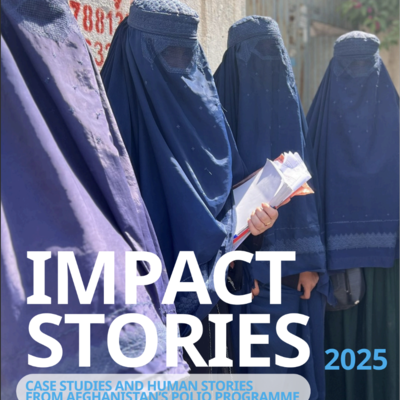
This compendium from the Afghanistan Country Office Polio Programme's SBC team brings together the key lessons and experiences from 2025, combining technical case studies with human-interest stories from the field.
The four case studies showcase how the programme adapted its strategies to overcome operational and social challenges through hyper-localized planning, multi-layered engagement, and integrated service delivery:
- The cluster-level approach in the Eastern Region — how a redesigned site-based model, supported by female social mobilizers, reduced missed children to 1.5% after the house-to-house ban.
- Multi-layered engagement in the Southeast — activating district authorities, religious leaders, and community elders to address vaccine hesitancy during the May 2025 NID.
- Integrated service delivery in Chardei village — combining WASH and SBC interventions following a fatal polio case, with water treatment adoption rising from 15% to 93%.
- Leveraging lived experience in the Western Region — partnering with a women's paralympic basketball team in Herat, many of them polio survivors, to act as social mobilizers.
The human-interest stories complement these strategic insights with voices from the field, organised around three groups: frontline workers (vaccinators, social mobilizers, and volunteers), polio survivors turning personal adversity into advocacy, and community influencers including religious leaders and tribal elders.
Together, these stories highlight the central role of trust-building, dialogue, and storytelling in the Comprehensive Pull Strategy, and offer practical lessons for SBC programming in Afghanistan and other high-risk settings.